
SoftWave Therapy in Los Angeles
Regenerative Shockwave Therapy for Pelvic Pain, Chronic Injury, Scar Tissue & More
Why Patients Choose SoftWave Therapy
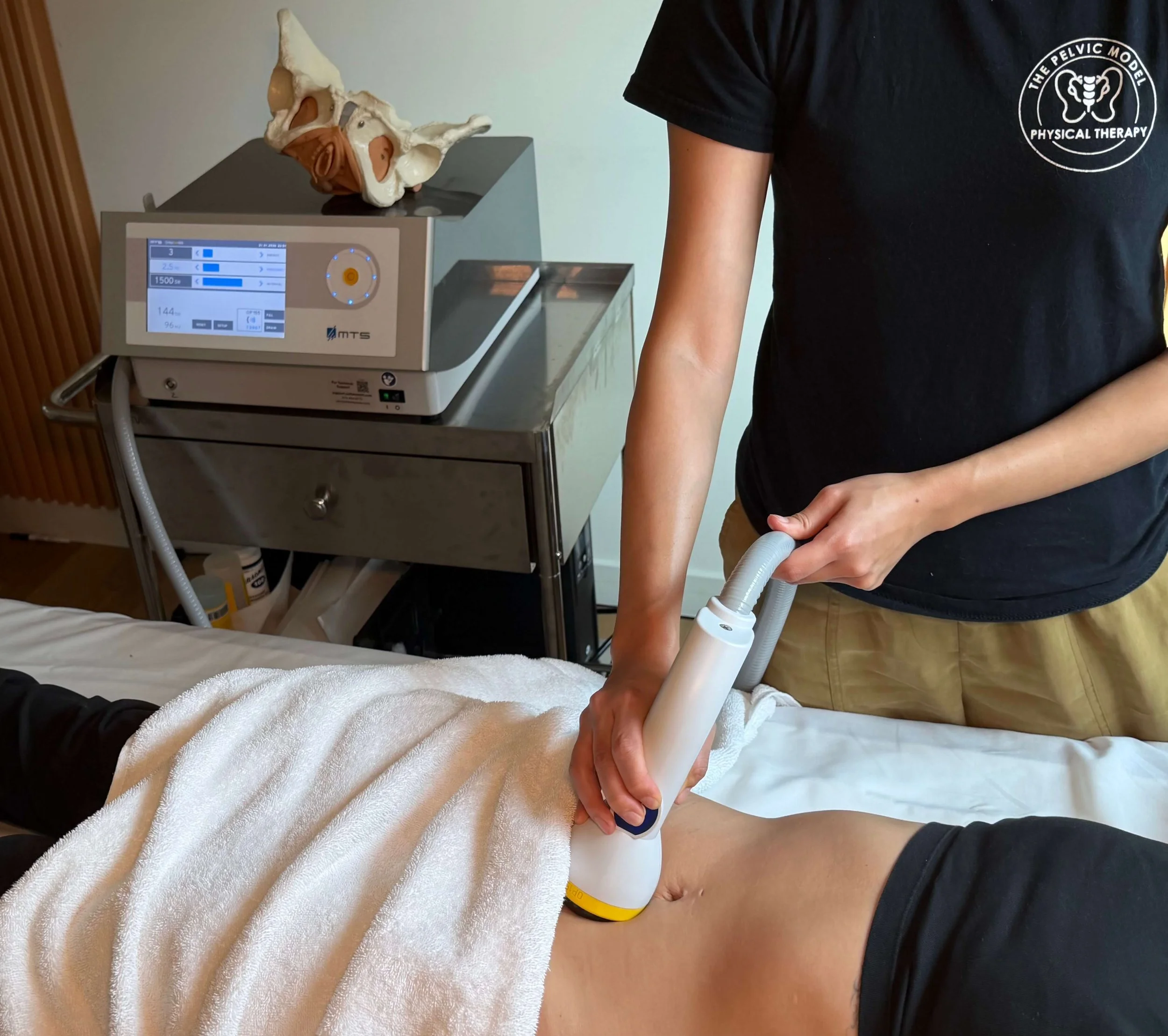
SoftWave Therapy (also called electrohydraulic shockwave therapy or extracorporeal shockwave therapy) is a cutting-edge, non-invasive treatment that stimulates the body’s natural healing processes. At The Pelvic Model in Highland Park, Los Angeles, we use SoftWave to support tissue repair, improve blood flow, reduce inflammation, and accelerate recovery without medication or surgery.
SoftWave Technology delivers broad-focused acoustic shockwaves that penetrate deeply into affected tissues. This stimulates biological responses including:
Increased blood supply to injured areas
Modulation of inflammation
Activation of stem cell signaling
Tissue remodeling and regeneration
Reduction in chronic pain signaling
Conditions Treated with SoftWave Therapy
We integrate SoftWave into pelvic therapy for conditions such as:
Chronic pelvic pain
Dyspareunia (pain with intercourse)
Cesarean scar restriction & cesarean scar tissue pain
Perineal scar pain
Pelvic floor muscle guarding
Erectile dysfunction support
Pudendal neuralgia
Chronic prostatitis symptoms
Pre/post surgery
Pelvic & Sexual Health Applications
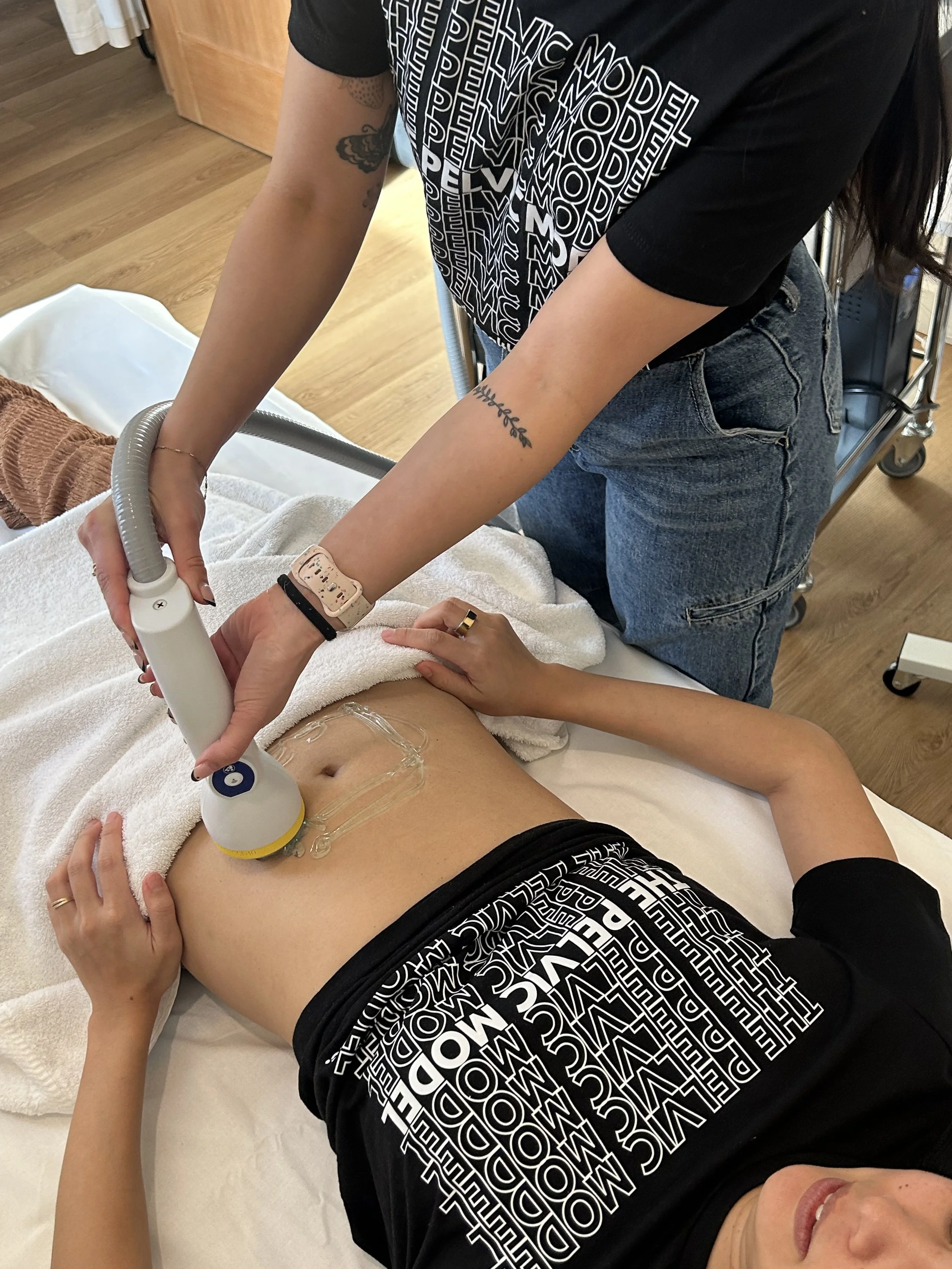
SoftWave is also effective for:
Musculoskeletal pain
Arthritis/joint pain
Tendinopathies (e.g., Achilles, patellar, rotator cuff)
Plantar fasciitis
Low back pain
Scar tissue
Non-healing wounds
Hip pain & bursitis
Orthopedic & Musculoskeletal Conditions
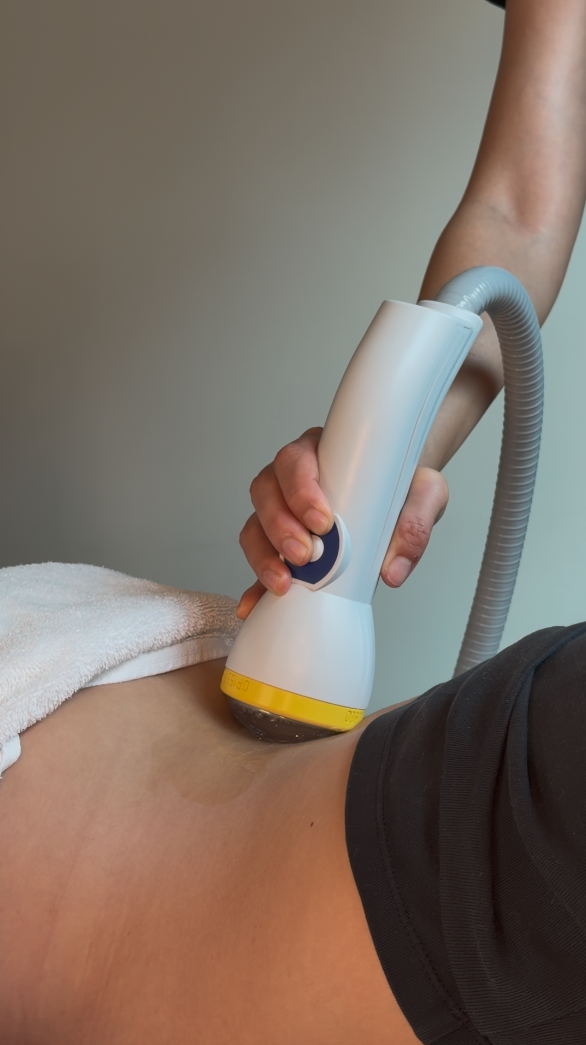
SoftWave Therapy is a form of extracorporeal shockwave therapy (ESWT) that uses short bursts of acoustic energy (sound waves) to interact with tissue at a cellular level.
Here’s what happens biologically:
Acoustic waves travel through tissue, stimulating your cells’ natural healing signals.
Local blood vessels increase perfusion and nutrient delivery.
Resident stem cells and repair pathways are activated.
Inflammation is modulated, reducing chronic pain patterns.
Tissue remodeling supports functional recovery.
How SoftWave Therapy Works
At The Pelvic Model, SoftWave is not a standalone treatment. It is integrated into the comprehensive, whole-body pelvic therapy we are known for.
Our approach prioritizes:
Deep understanding of your story and symptom pattern
Nervous system regulation and safety
Breath mechanics and pressure management
Scar tissue mobility and tissue health
Movement retraining and strength
Functional outcomes that matter to your real life
SoftWave becomes part of this system when it can meaningfully support tissue healing and recovery.
Why The Pelvic Model for Shockwave & Pelvic Health
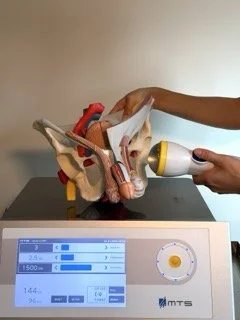
Frequently Asked Questions:
Does SoftWave Therapy work for pelvic pain?
Yes. When integrated with skilled pelvic therapy, SoftWave can support muscular, connective tissue, and blood flow adaptations that contribute to chronic pelvic pain.
We use it for patients with musculoskeletal dysfunction, or when scar tissue, chronic inflammation, or poor tissue healing is limiting progress.
If you’re unsure whether you’re a candidate, we evaluate this during your initial assessment.
What is SoftWave Therapy?
SoftWave Therapy is an advanced form of shockwave therapy that uses electrohydraulic acoustic waves to stimulate healing, improve circulation, and reduce pain.
Unlike many radial shockwave devices, SoftWave delivers broad-focused energy that stimulates biological repair rather than mechanically breaking tissue.
It is non-invasive and performed in the clinic.
Is SoftWave Therapy safe?
SoftWave is FDA-cleared for improving blood flow and activating connective tissue.
It is widely used in sports medicine, orthopedics, and regenerative rehabilitation.
We screen every patient carefully. It may not be appropriate if you are pregnant (over the treatment area), have active cancer in the area, or certain implanted electronic devices such as a pacemaker.
Does SoftWave Therapy hurt?
Most patients feel a rhythmic tapping or pulsing sensation.
Intensity is adjustable. Areas with more inflammation or tissue sensitivity may feel stronger, but treatments are typically well tolerated.
Some mild soreness afterward is normal and usually resolves within 24–48 hours.
How many SoftWave sessions will I need?
The treatment plan varies by condition and chronicity. Typically:
3–6 sessions for many musculoskeletal conditions
Chronic or complex pelvic concerns may require a tailored series
Your plan will be individualized and integrated into your broader pelvic therapy program.
Can SoftWave be combined with pelvic therapy?
Yes, and this is where it becomes most effective.
At The Pelvic Model, we combine SoftWave with:
Manual therapy
Neuromuscular retraining
Breath mechanics
Nervous system regulation
Movement retraining
SoftWave is not a replacement for pelvic therapy. It is an amplifier.
Is SoftWave Therapy covered by insurance?
SoftWave therapy is typically not covered by insurance. If it is appropriate for you, we’ll review how it fits into your overall treatment plan.
How do I know if I’m a good candidate for SoftWave Therapy in Los Angeles?
If you have:
Pelvic pain
Persistent scar tissue discomfort
Erectile dysfunction related to blood flow
Tendinopathy that hasn’t improved
Pain that feels resistant to traditional therapy
You may be a candidate.
The best next step is to inquire so we can determine whether SoftWave fits into your plan.
What People Are Saying
-
Pelvic Patient
Softwave is a magical invention. It helped dramatically with my pelvic pain especially my pain with sex and my lower back pain. The treatment isn’t painful at all and the results are pretty instant and gradually improve over time. It’s your body healing itself really. I can’t recommend this treatment enough. It is a huge win for women’s health and for anyone dealing with pain or inflammation.
-
Pelvic Patient
I am a patient at The Pelvic Model and started the Softwave Therapy several weeks ago. I'm addition to the amazing progress I have seen my body improve upon through my regularly scheduled sessions, with the addition of the Softwave Therapy, there was an undeniable leap in pain and discomfort relief in my low back. I was diagnosed with Degenerative Disc Disease in 2018 and for the first time since then, even after many years of different kinds of physical therapy modalities, I feel actual space and relief between my discs again. I can jog again without experiencing stiffness or sciatica. I have much more comfort at rest. I have recommended pelvic floor physical therapy to many friends and now I include a recommendation for Softwave Therapy.
-
Pelvic Patient
I'll be honest — I'm always a skeptic when it comes to new technology. But experiencing SoftWave firsthand changed that pretty quickly.
I came in dealing with two chronic issues I'd basically accepted as permanent: significant inflammation and swelling in my knee (five years post-surgery), and persistent soreness and muscle tension in my neck. Both had been ongoing for five to six years. Once I learned about the connection between these issues and pelvic floor dysfunction, trying a SoftWave session felt like a no-brainer.
After my very first session, I felt an immediate difference. I'd been told I might feel a bit tired afterward — but I actually felt more energized and went straight to the gym, working out completely pain-free. After four sessions total, the swelling hasn't returned and the scar tissue I truly believed was beyond help has begun to mobilize in a way I never expected.
SoftWave gave me something I hadn't felt in years: real hope that "chronic" doesn't have to mean "permanent." I'm genuinely grateful — and officially a convert.